
January on the Mountain: Why the Dry Season Is Worth the Cold
January is one of the two best windows to climb Mount Kenya. The nights are coldest, the skies are clearest, and the mountain belongs almost entirely to you.
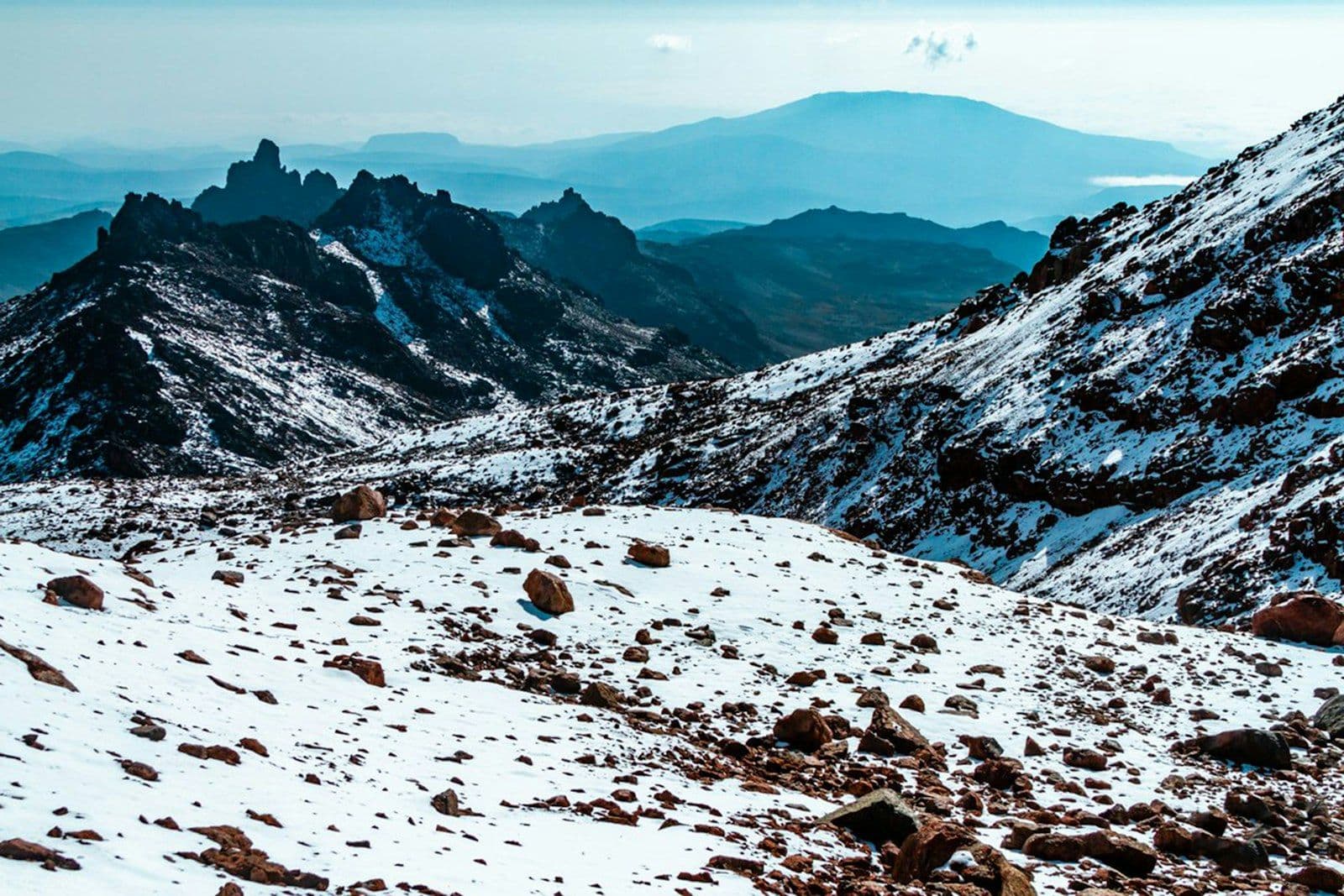
There are two optimal windows for climbing Mount Kenya: January to February, and July to October. Each has its own character. January is the colder of the two dry seasons, and it is consistently our preferred window.
Why January Works
The long dry season runs roughly from December to March across most of Kenya. On Mount Kenya, this translates to low precipitation, clear mornings, and stable weather patterns that make the pre-dawn summit departure considerably more manageable than it sounds.
January skies above 3,000 m are often extraordinary. The absence of atmospheric moisture produces visibility that extends, on the clearest days, to Kilimanjaro (340 km south) and the Indian Ocean horizon to the east. Summit mornings offer a clarity that wet-season climbs rarely achieve.
The Cold Is Real
January nights at Shipton's Camp (4,200 m) average -7 to -10 degrees Celsius. Summit morning temperatures range from -5 to -15 degrees Celsius depending on wind. This is colder than the July-October window and requires more deliberate preparation.
What this means in practice: a down jacket that was comfortable in October may not be warm enough in January. Insulated gloves rather than fleece. Layering that assumes you will be standing still on exposed rock at altitude before sunrise.
The cold is not a reason to avoid January. It is a reason to pack properly for it. Groups that prepare well consistently report January as the best conditions they have experienced on the mountain.
Trail Conditions
The dry season keeps the trail surface in good condition. The notorious vertical bog on the Naro Moru route, a section of waterlogged moorland that becomes genuinely difficult in the wet season, is firm and manageable in January. The Chogoria approach avoids the worst of the mud that accumulates between March and May.
Snow on the summit rocks is possible in January, particularly in the first half of the month. This rarely affects the Point Lenana approach but can make early-morning footing technical above 4,700 m. Your guide will carry microspikes if conditions warrant them.
Crowd Levels
January is quieter than the July-October peak season. School groups are largely absent as the Kenyan academic year is in session, and international trekkers who travel over the New Year period tend to be on shorter itineraries. Shipton's Camp, which can feel crowded in August, is noticeably more open.
This matters for morale as well as logistics. The moorland above Old Moses Camp, shared with only a handful of other parties, has a wilderness quality that is harder to find in high season.
Practical Notes for January Trips
Book early. The combination of low crowds and ideal conditions makes January a popular window for guided groups who know what they are doing. The best guides and the best camp spots fill faster than the booking volume suggests.
Arrive in Kenya with a day's buffer before your trek starts. Flight delays into Nairobi during the December to January holiday period are common, and missing your guide at the gate because of a delayed connection is easily avoided with one night in Nanyuki beforehand.
Pack the cold-weather kit, not the warm-weather kit. Your guide will tell you this when you enquire, and it is worth repeating: January is less forgiving of under-packing for warmth than almost any other time on this mountain.