
Summit Day on the Sirimon Route: What to Expect Hour by Hour
The alarm goes off at 03:00. You are at 4,200 m. Here is exactly what happens between now and the summit of Point Lenana, and how to make it count.
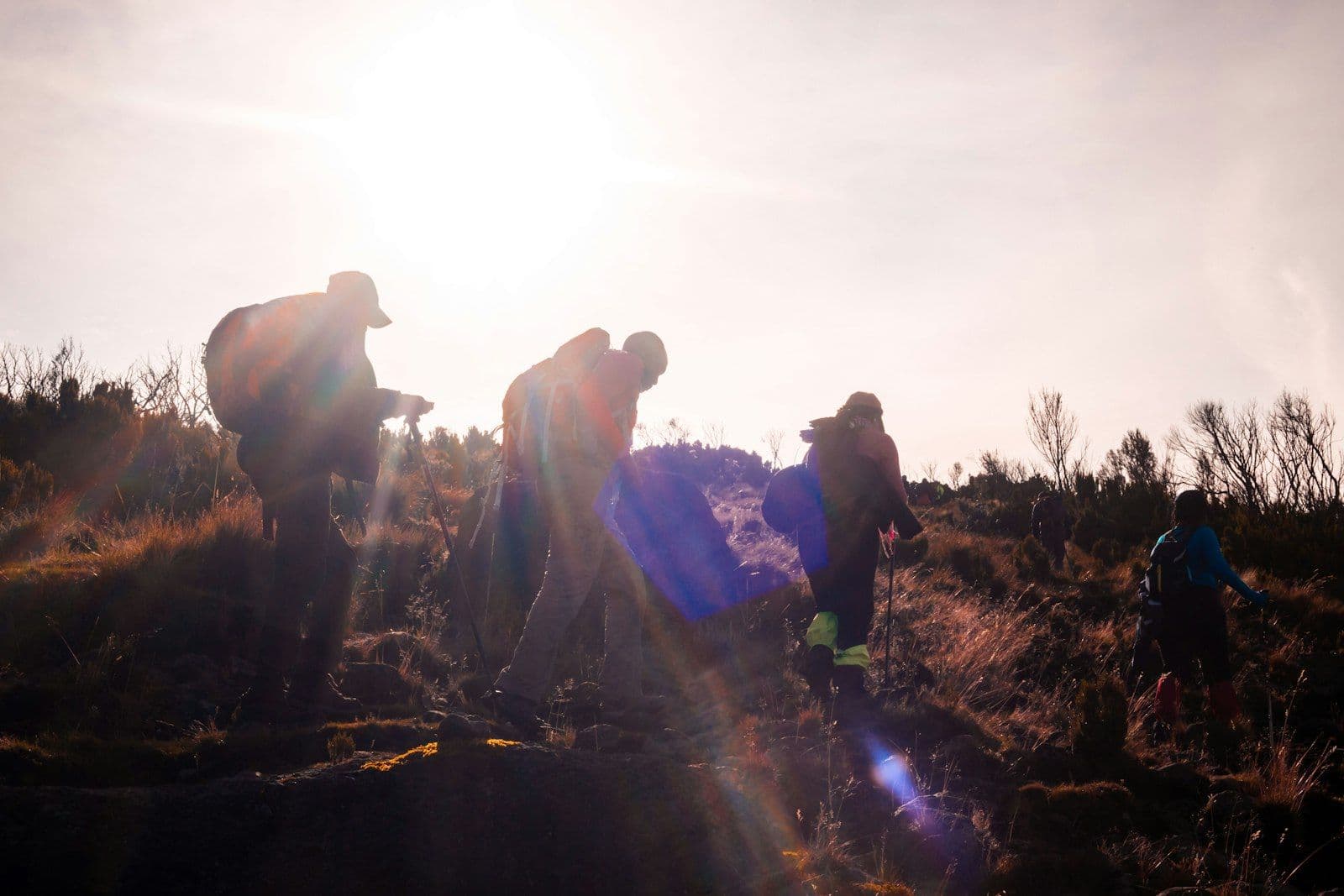
The alarm goes off at 03:15. It is properly cold. Outside the tent at Shipton's Camp (4,200 m), your breath hangs in the air and the sky is a hard, absolute black. The peaks of Nelion and Batian are invisible above you, hidden by the darkness you are about to walk into.
This is summit day on the Sirimon Route. You have been building to it for three days. Today it either happens or it does not.
03:15: Shipton's Camp
Your guide wakes you twenty minutes before the agreed time. This is deliberate: it gives you time to come around slowly, eat something, and sort your layers without rushing. Summit-day nerves have a way of slowing everything down.
The pre-dawn temperature at Shipton's sits between -5 and -10 degrees Celsius in the dry season. Put on everything you brought. Base layer, mid-layer, down jacket, hard shell. Two pairs of socks. Gloves on before you leave the tent.
Breakfast at this hour is whatever your stomach will accept. Hot tea, a couple of biscuits, maybe porridge if the cook has it ready. Eating matters more than it feels like it does. Altitude suppresses appetite, but you need the fuel.
04:00: First Steps
You leave Shipton's with head torches lit. The trail initially follows the valley floor before climbing steeply through scree towards the Lewis Glacier moraine. The pace is slow and deliberate. This is not a race, and your guide knows it.
The first hour is the hardest mentally. You cannot see the summit. You cannot see much of anything. You are moving on trust: trusting the trail, trusting your guide, trusting the acclimatisation work you did yesterday.
05:30: The Ridge
By 05:30, if you started well, you should be approaching the upper ridge. The terrain changes here: less scree, more rock. Your hands may come out of your pockets. The sky to the east has started to lighten, just barely, a grey thinning of the darkness.
This is where altitude earns its reputation. Every step takes more out of you than it should. Breath comes harder. Stops become more frequent. Your guide will manage the pace with short rests and slow, steady forward progress. The worst thing you can do is push too hard here.
06:15: Point Lenana (4,985 m)
The summit is not dramatic in the way of Kilimanjaro's crater rim or Everest Base Camp. It is a broad, rocky plateau at the top of the world. Then the sun comes up over the horizon of the Laikipia plains, thousands of metres below, and everything changes.
The views on a clear morning from Point Lenana are extraordinary. Kilimanjaro is visible to the south on the clearest days. The Indian Ocean horizon to the east. The Aberdares and Rift Valley to the west. You are standing at the third-highest point in Africa.
Your guide will take a photograph. You will sign the summit register. You will try to eat something and probably fail. You will stand there longer than planned because it is very hard to leave.
The Descent
Allow more time for the descent than you think you need. The trail is clear but the terrain is technical in places, and tired legs on loose scree require patience. Most parties are back at Shipton's Camp by 09:30.
From Shipton's, you continue down to Old Moses Camp (3,300 m) on the same day, a further three to four hours of walking. The altitude loss is a relief. By the time you reach Old Moses, the heaviness in your head has lifted and you are hungry in a way you have not been since the morning you started.
What Makes the Difference
Having guided hundreds of people up this mountain, our team has a clear view of what separates those who summit from those who turn around. It is almost never fitness. It is usually acclimatisation: taking the extra day at Shipton's seriously, completing the acclimatisation hike, and sleeping when you can.
The other factor is trust. Trust your guide on pace. Trust the slow, steady rhythm that looks too easy at the bottom of the climb and feels exactly right at 4,800 m. The mountain will always be there. The summit is not going anywhere.